
Why We Believe Learning Should Be Story-Driven
Discover why story-based learning improves memory, engagement, and creativity. Research-backed insights for homeschool families using story-driven education.
HOMESCHOOL
Jordan Ashley
11/1/20253 min read
When we think of homeschool days, we often picture textbooks, worksheets, and lesson plans. Those are essential, and yes, we use them. But what if there was a way to make those lessons stick, to spark curiosity, and to connect everything into a meaningful whole?
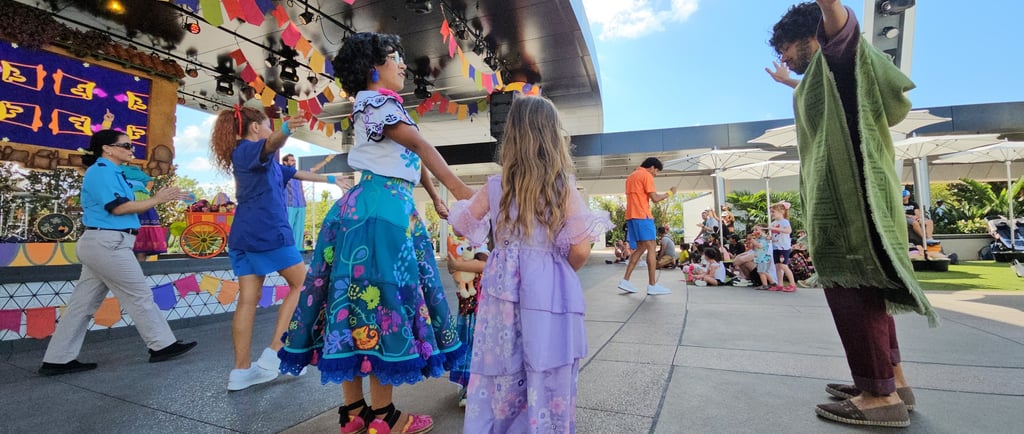
That’s where story-driven learning comes in. By weaving narrative into your instruction, whether through theme, park moments, travel stories, or character journeys, you enrich traditional methods with powerful cognitive, emotional, and motivational benefits.
The Research: Why Stories Matter in Learning
Engagement and attention
Stories capture attention in ways that facts alone struggle to match. According to a Harvard Business Review article, storytelling “builds familiarity and trust… works for all types of learners” and notably helps facts join a meaningful narrative, making them easier to absorb. Harvard Business Impact
Also, narrative-based learning environments were shown to increase student focus and reduce distractions in immersive contexts. PMC+1
Memory and retention
One of the most compelling reasons to use story-driven methods is that stories help students remember. A well-told story enables learners to retain information far better than an isolated fact. Harvard Business Impact
For example, embedding scientific content into a narrative context led to higher performance in experimental studies. ScienceDirect
Connection across subjects & learning styles
Storytelling isn’t limited to language arts, it’s a cross-curricular powerhouse. Narrative helps with science, history, art, geography, and more. One blog on narrative storytelling in education reports that stories improve comprehension, emotional connection, and help students of all learning styles. Acacia University
Similarly, the educational benefits of storytelling include presenting transformations (characters learning and growing) which mirror the learning process itself. Teaching at Pitt
Emotional & social benefits
When we tell stories, we engage emotions, and emotions anchor memory. Research shows storytelling fosters empathy, a sense of belonging, and deeper engagement. Boston University
And for younger children especially, it supports cognitive development, language growth, and imagination.
Why We Still Use Core Curriculum (And Why That Matters)
We believe in structure, foundation, and proven methods, because they matter. A strong grammar, math, reading, and science base gives kids the tools they need. But without connection, context, and purpose, those tools can feel isolated.
That’s why our approach at Most Magical Homeschool on Earth blends the traditional (e.g., textbook lessons, math drills, timeline memorization) with the narrative (story arcs, character journeys, travel-inspired investigations).
This dual method ensures kids get the rigor and consistency of core curriculum and the richness and retention boost of story-driven learning.
How To Make Story-Driven Learning Work in Your Homeschool
Here are practical ways you can integrate this approach in your daily rhythm:
1. Frame each unit as a narrative
Start a unit by presenting a “story”, e.g., “Our family is explorers tasked with discovering the lost city beneath the rainforest.” Then, structure lessons as chapters in the story: geography, science, reading, art, all tied in.
Why it works: The story provides context, makes objectives feel meaningful, and gives your child a role in the narrative.
2. Embed traditional lessons within story moments
When teaching fractions, for example, you might say: “Our dragon-rider must divide her supply of magic crystals between riders.” Then follow with your textbook drill.
Why: The context makes the math more memorable and engaging.
3. Use travel or real-world experiences as story anchors
Visiting a theme park, museum, or our own backyard can act as the “chapter” in your story. Ask kids to note what they observe, what problem they might solve, or how things were built.
Why: Learning becomes anchored in experience, known in education research as anchored instruction.
4. Reflect with narrative questions
End lessons or days by asking: “What challenge did you face? How did you solve it? What will the next chapter be?”
Why: Reflection in story form helps consolidate learning and boosts metacognitive awareness.
5. Use story-rich resources that support multiple learning styles
We provide unit studies that include visuals, hands-on activities, discussion prompts, and follow-up reflection. That multi-modal approach matches research on storytelling’s ability to engage auditory, visual, and kinesthetic learners. Harvard Business Impact
Resistance, Reality & Balance
You may wonder: If I lean into story-driven learning, will I neglect the “hard” facts? Will we lose academic rigor?
Answer: Not at all, when done thoughtfully, story-driven learning enhances rigor by giving concepts context.
However, for optimal balance:
Keep your core curriculum schedule (math, reading, science fundamentals), just remember you can make it more fun!
Add story hooks, narrative frames, and rich prompts
Use traditional assessments (quizzes, worksheets) when appropriate... we use it from time to time throughout the year to meet state requirements and to see what we need to focus on in the coming months.
Use narrative elements as a complement to core instruction.
Why We Believe It Matters for Your Family
Because in a world filled with distractions, we want our children to not only learn what but understand why. We want them to remember lessons without rote memorization. We want them to travel, explore, ask questions, and connect subjects in a way that feels like a story rather than a lesson.
With story-based learning, your homeschool becomes more than school, it becomes an adventure. One where your family learns together, grows together, and builds memories that stick.
Ready to add story-rich unit studies and travel-anchored lessons to your homeschool rhythm?