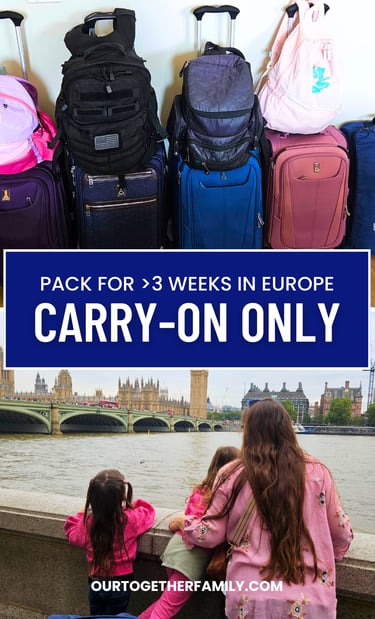
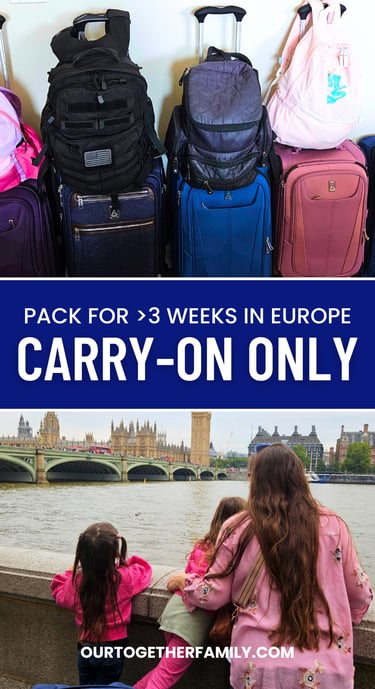
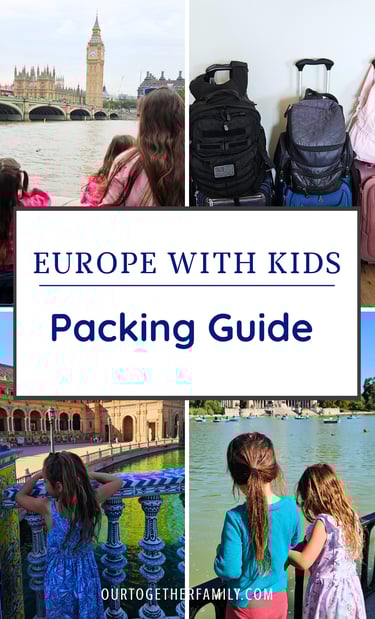
How to Pack a Carry-On for >3 Weeks in Europe (With Kids)
Wondering how to pack carry-on for 3 weeks in Europe with kids? Here’s exactly what we packed for a 26-day trip through Scotland, England, France, Monaco, and Spain.
FAMILY TRAVEL
Jordan Ashley
3/6/202613 min read
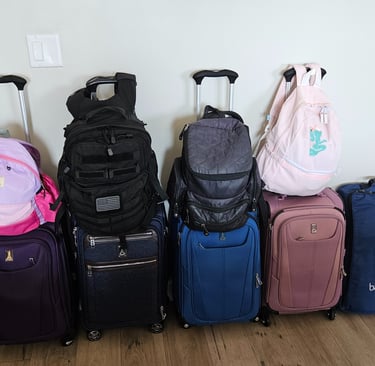
If you are wondering how to pack a carry-on for 3 weeks in Europe, especially with kids, you are not alone. We traveled for 26 days through Scotland, England, France, Monaco, and Spain with our 6 year old and 3 year old… and we were determined to pack everything into carry-ons only.
We would not have been able to go to as many places and have all of our amazing adventures without our carry-on strategy. In order to travel by bus, trains, planes, cars, and undergrounds (all while keeping up with 2 little kids) we would need to pack light without leaving out the necessities.
Watch the Full Packing Video
Check out our full packing video, including a look at our mix-and-match outfits in action across Europe. This video goes into detail and shows you what it looks like to pack everything in a carry-on. It is also the beginning of our European Season, so be sure to follow along to see where the adventure takes us.
Is Carry-On Only Realistic for a 3-Week Europe Trip?
Yes, it is definitely realistic to pack a carry-on only for a 3 week Europe trip, you just need a bit of strategy and the right tool.
We decided to go the carry on only route for a few reasons:
With all of the cobblestone streets, lack of elevators in historic locations, and the inevitability of getting on and off trains and other transit platforms, we wanted to be able to easily carry our bags.
Since we had little kids we needed bags that would be easy for them to push and carry, and when they couldn’t carry it, we could realistically carry two bags at once if we needed to hop on a train or plane.
Carry-ons were included on all of our plane and train rides so we didn’t need to pay for extra bags.
Our Exact Carry-On Packing Strategy
Choosing the Right Luggage
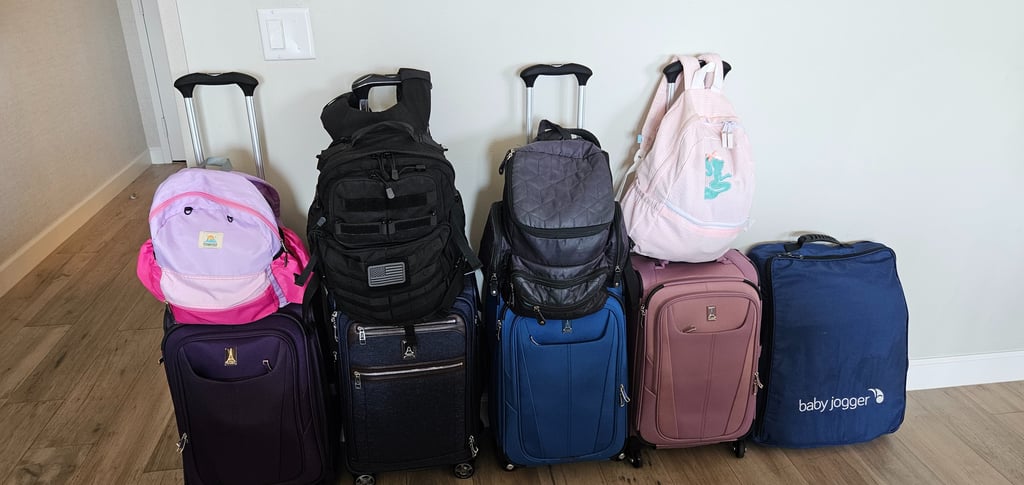
Choosing the right luggage was such an important piece to the planning puzzle. Why? First, we had to make sure our carry-ons would actually count as carry-ons for each of the airlines we would be flying on. We flew on American Airlines, British Airways, and Air France during our trip to Europe.
We also wanted to make sure that our bags would be easy to push, even for our 3 year old, because she would need to push her own bag on several occasions. But even more so, it needed to be easy to push because my husband ended up pushing all four bags (and sometimes the stroller) at the same time. That is the reality of travel with little kids, and if we didn’t have the ability to push multiple bags at time, our trip would have derailed fairly quickly.
We also wanted to make sure we had luggage that would last for many years to come, because we travel together often. Thankfully I had already been testing my carry-on luggage on dozens of flights and it has held up wonderfully, so we ended up getting a few more of them.
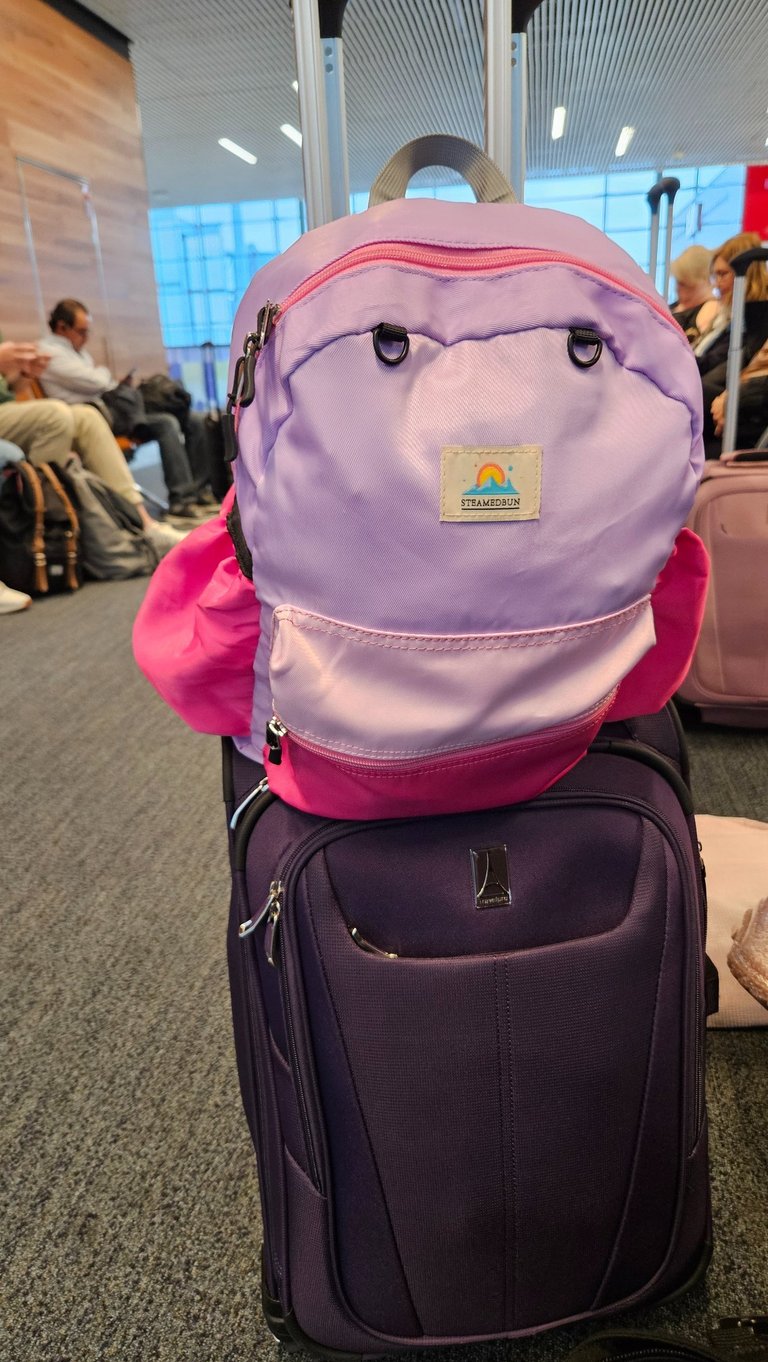
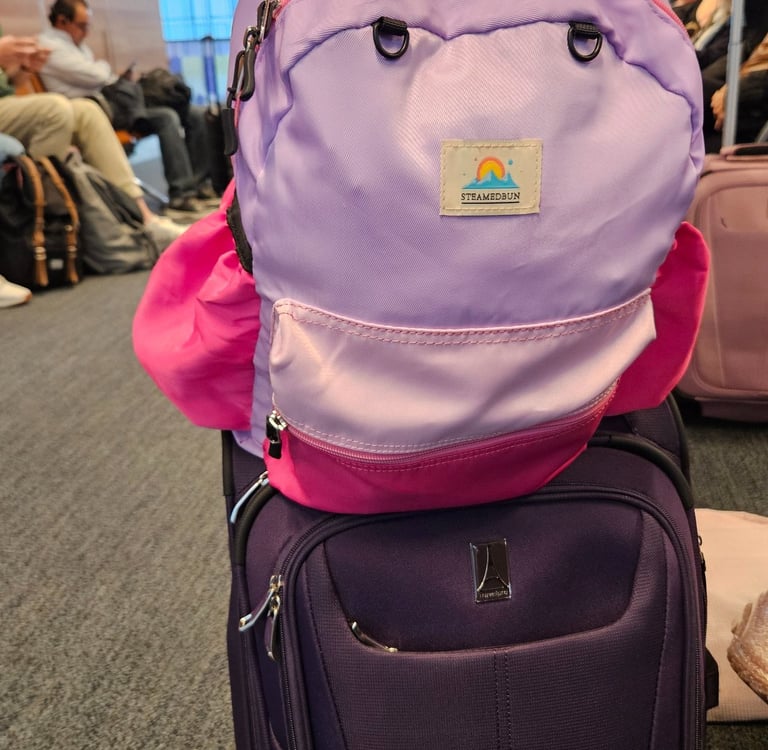
This TravelPro luggage is the exact one we use https://amzn.to/4so0znM
The Capsule Wardrobe Method + Why I Finally Switched
I finally caved. The capsule wardrobe is something I have been fighting for a long time. I was always more of a “but what if I need…” and a “I don’t know what I will feel like wearing so I am going to be over prepared” kind of girl. It only got worse when I became a mom. But this trip I didn’t really have a choice if I was going to try to accomplish all I had planned. So that plus the fact that I was pregnant and only had a handful of clothes that fit pushed me to finally switch to the capsule wardrobe…and I am never going back.
I created over 24 outfits with 4 bottoms and 7 shirts (3 long sleeved, 4 short sleeved), 2 sweaters, and 5 dresses. One key was ensuring I chose primarily clothes without patterns and colors that went well together. I made sure each item of clothing matched at least 3 other things so that I could mix and match. It worked out so well, even in a variety of climates and environments which I will talk about in a just a bit.
I also packed a bathing suit, pajamas, socks, one pair of water proof shoes (I love my vessi tennis shoes), and one pair of sandals.
What I Packed for 26 Days in Europe (Detailed List)
For this 26-day trip across Scotland, England, France, Monaco, and Spain, I packed using a layered capsule approach and planned for one laundry stop. We traveled carry-on only with two young children, so every item needed to be practical, versatile, and easy to move through airports and train stations.
Here’s exactly how I structured it.
Women’s Clothing (Layered Capsule Strategy)
I packed pieces that could mix and match across multiple climates from cooler evenings in Scotland to warmer days in southern Spain. Many of mine were maternity specific because, well I was pregnant, but this works without that added element as well.
Bottoms
1 pair of maternity jeans
2 skirts
1 pair of maternity leggings
1 pair of maternity biker shorts
Tops
7 total (3 long sleeve, 4 short sleeve)
Dresses
5 versatile dresses that could be layered up or down
Outerwear
Trench coat (worn on the plane to ensure everything fit)
2 sweaters
Lightweight button-up shirt (doubled as a light jacket and cathedral coverage)
Shoes
Waterproof walking sneakers (worn on the plane)
1 additional pair of shoes- I would suggest sandals that are comfortable for walking and make going to the pool or sea easy
Instead of packing complete outfits, I packed combinations. Every top paired with almost every bottom, which gave me flexibility without overpacking.
What I Packed for Each Child
I packed the kids bags for Europe in a similar way. I focused on layering, durability, and flexibility.
Tops
7 short sleeve shirts
3 long sleeve shirts
Bottoms
8 mix-and-match pants or leggings
4 shorts
Dresses
6–7 per child
1 jumper
Layers
Sweatshirt
Rain jacket
Swimwear
1 swimsuit per child
Extras
Extra underwear and socks (intentionally overpacked)
Character outfits for themed experiences (Harry Potter robes)
We planned for at least one laundry stop during the trip, which allowed us to pack for roughly 10 days and rotate.
Travel-Day & Personal Item Essentials
These were packed in backpacks or personal items for easy access during flights and train transfers.
Documents & Travel Items
Passports and passport holder
Travel insurance details
Digital copies of important documents
Tech
Universal travel adapter (UK + EU compatible)
Multi-port power strip
Portable power banks
Charging cables
Tech organizer pouch
Sleep & Comfort
Compact sound machine
Sleep masks (for adults)
Lightweight blanket
Kids-Specific Items
Ride Safer travel vests
Tablets with downloaded shows
Foldable headphones
Small activity kits
Familiar snacks
Health
Basic medications
Children’s medications
Thermometer
Band-aids
Hand sanitizer and wipes
Europe-Specific Utility Items
These were small but made a big difference throughout the trip.
Laundry detergent sheets
Travel laundry bag
Collapsible straw
Portable utensil set
Pocket blanket
Silicone cup covers
Many of these items are things we use regularly at home, but they became even more helpful navigating trains, cobblestone streets, beaches, and long sightseeing days.
How We Made This Work
For a 26-day Europe trip, we did not pack 26 days of clothing. We packed for almost 2 weeks, and planned where exactly we would do laundry in Spain.
A few keys to making sure everything fit into our carry-ons was to wear our bulkiest items on the plane, use compression packing cubes, and being content with a capsule wardrobe.
Want the Organized Checklist Version?
If you’d prefer a clean, printable checklist version of this exact packing list, plus additional Europe-specific reminders, you can download the free packing guide here.
Packing for Multiple Climates in Europe
Scotland & England
We expected cooler weather and a high probability of rain… and we got it. In order to ensure we were prepared for the cooler climates of the UK we brought rain jackets/waterproof jackets, waterproof shoes (Vessi for me, rainboots for the kids, Salomons for my husband), and sweaters for layering for the cool mornings and evenings.
France & Monaco & Spain
One thing to note about visiting France and Monaco is to look into the experiences you want to do while you are there. If you plan on visiting a cathedral for example you will want to have a sweater or something to cover your shoulders. Another thing to keep in mind is that you will likely be walking on cobblestone streets…wear comfortable shoes. I personally don’t care that I am not high fashion while walking 20,000 steps with little kids, do you?
Spain & South of France
If you are visiting Spain or the South of France anywhere close to the summer time you will want to prep for heat, bring sun protection, and ensure you have breathable fabrics. Also keep in mind the dress code for certain tours you have in mind.
Europe Specific Packing Considerations Most Families Overlook
If you are traveling to Europe, I want you to be as prepared as possible for some of the differences you might experience. So here are a few things to keep in mind before you go:
UK vs EU Plug Types
One of the most common mistakes families make when packing for Europe is assuming that one “European adapter” will work everywhere. It won’t.
The United Kingdom and most of continental Europe use different plug types.
In Scotland and England, outlets use Type G plugs. These have three large rectangular prongs and are physically different from most European outlets.
If your adapter does not specifically list “Type G” compatibility, it will not work in the UK.
In France, Monaco, and Spain, outlets typically use Type C, E, or F plugs. These have two round prongs and are commonly referred to as “EU plugs.”
What We Used (And Why)
Because we were traveling between the UK and multiple EU countries on the same trip, we chose a universal travel adapter that supports both Type G (UK) and Type C/E/F (EU) outlets.
This meant:
We did not have to carry separate adapters
We didn’t risk packing the wrong one for the next country
We could move easily between Scotland, England, France, Monaco, and Spain
Voltage Note (Important but Often Overlooked)
The UK and most of Europe use 230V electricity, while the United States uses 120V.
Most modern electronics, like phones, tablets, and laptops are dual voltage and only require a plug adapter, not a voltage converter.
However, high-powered appliances like hair tools may require a converter unless they are specifically labeled as dual voltage.
We avoided bringing high-powered styling tools and kept our setup simple.
Train Stations & No Elevators
Taking the train and public transport is almost inevitable here. That, combined with the idea that there are limited elevators (particularly in historic buildings), make the size of your luggage matter a lot. Ensure you can carry your luggage (and your kids' luggage) so you will be prepared for train stations, getting on and off transport, lack of lifts/elevators, and cobblestone streets.
Cathedral Dress Codes
As I have mentioned earlier it is important to read up on each historical site, cathedral, tour, etc. you would like to visit so you can know their dress code. Several will require covered shoulders for example so you will want to be prepared both in the luggage you bring and what you choose to wear each day.
Pharmacy Differences
While all of these countries that we visited have a good healthcare options, and plenty of medicine… what is available is different than what you might be used to at home. I believe it is always a good idea to have basic medications on hand when you travel just in case, especially if you are traveling with kids. But when we travel internationally it is especially important for these reasons.
I ended up having to go to the hospital in Spain and then get a prescription filled while there. Many things were similar but there were some things that definitely surprised me. I will have to save that story for later in the series though because it’s a long one.
Before you bring your medications (including prescriptions) be sure to check each country you will be visiting rules about bringing medication. Some require you to have it in particular containers, some restrict certain medications or the amount you have with you, and so on. Just double check before you go, especially if you have prescriptions.
How We Made Carry-On Only Work With Kids
Laundry scheduling: If you know when and where you will be doing laundry, it becomes less overwhelming and you will stress less while you pack and while you are there on vacation. Having the flexibility to do laundry, whether at your hotel or at a nearby laundry mat makes traveling with just a carry-on possible, which is so worth it.
Wearing bulky items on plane: We always wear are largest jackets, hats, shoes, etc. on the plane because it saves so much room in your luggage. This little step can be make or break for trying to “make it all fit”.
Personal item strategy- In order to make only carry-ons work, we needed to pack our personal items well. The kids needed bags they could carry themselves and it needed to hold everything from emergency clothes, electronics, activities, chargers, and snacks. I would highly suggest a bag that has a few pockets, is closer to their size so you do not end up carrying it, and a buckle in the front to help it stay on while wearing and while it rests on the carry-on bag. When the kids had access to their things, and the responsibility of carrying it themselves, they had a mission and easy access.
What I’d Do Differently
Thankfully I did a ton of research, just like you are doing now, before we traveled so that I could be as prepared as possible. However, there are always things that I would do slightly differently. First, I would have multiple batteries for my cameras. My go-pro ran out of battery most days and even though we had the battery banks, I could not use the camera while it was charging.
Frequently Asked Questions
How many outfits do you need for 3 weeks in Europe?
12 outfits is a good number for 3 weeks in Europe assuming you can make a laundry stop. However, rather than outfits, consider a mix and match wardrobe so you can create even more outfits out of less articles of clothing.
Is carry-on only realistic with kids?
Yes, carry-on only is definitely realistic with kids. I would consider it almost essential if you plan on moving between cities and even countries. If you plan a mix-and-match capsule wardrobe that layers easily then you will have plenty of clothes and necessities for the kids and it should fit well in a carry-on (especially if you use packing cubes that compress).
Using carry-ons only makes it more likely for the younger kids to move their own luggage, and when they cannot it makes it more manageable for the parents to move or carry multiple bags at a time.
What size luggage works best for European airlines?
For most European airlines, the safest option is a standard carry-on suitcase that is about 21–22 inches tall (including wheels and handles). This size typically meets the carry-on requirements for major international carriers like British Airways, Air France, and American Airlines when flying between the U.S. and Europe.
However, once you start flying within Europe, carry-on rules can become stricter. Some regional and budget airlines may limit carry-ons to smaller sizes or lower weight limits, so it’s always important to check the airline’s specific policy before flying.
For our trip, we chose compact carry-on roller bags that fit within the standard international carry-on dimensions so they would work across multiple airlines during the trip. Because we were traveling through Scotland, England, France, Monaco, and Spain and moving between airports, trains, and hotels having manageable luggage made a big difference.
Smaller carry-ons also helped with:
Navigating cobblestone streets
Carrying luggage up stairs in train stations
Lifting bags onto train racks
Moving quickly through airports
In our experience, a lightweight carry-on that rolls smoothly and stays within the 21–22 inch range works best for multi-country European trips, especially when traveling with kids.
Do you need a different plug adapter for the UK vs France?
You can get an adaptor with both UK and EU (including France) adaptability, and that would be my suggestion. They do have different outlet types therefore you will need something (or multiple adaptors) that can adapt to both
How do you handle laundry on a long Europe trip?
Look at where you will be approximately half way through your trip and check to see if your hotel at that time has laundry options. If not, search the local area of a laundry mat or other option. If you cannot find something around you during the half way point, consider making a laundry stop a bit earlier or later.
We travel for 26 days with carry-ons only so it was essential that we planned for laundry during our trip. We ended up doing it in Madrid and it worked out really well. We made sure to pack some detergent sheets that were a small/non-liquid option. I would also suggest bringing a laundry bag that can hang up, zip up, and reduce smells/transfer of smells.
Once we got close to the half way point of our trip, we began making one of our carry-on bags a laundry bag so we could separate our family of four’s laundry. That way we were ready for laundry day when the time came and our clean clothes stayed clean.
Planning Your Own Europe Trip?
If you’re dreaming about taking your family to Europe, I hope this guide helps make the planning process feel a little less overwhelming.
Traveling through multiple countries, especially with kids, comes with a lot of small decisions. From choosing the right luggage and packing for multiple climates to navigating trains, flights, and different hotels, those little details can really shape how smooth the trip feels once you arrive.
Our family spent 26 days traveling through Scotland, England, France, Monaco, and Spain, and we learned so much along the way. Throughout this Europe travel series, I’m sharing what worked, what we would do again, and a few things we would adjust next time.
If you’re planning a similar trip, you can find more destination guides, travel tips, and family-friendly itineraries here on the blog.
You can also download the free printable packing checklist that goes along with this guide to make preparing for your own trip a little easier.
And if you’d like a little extra help mapping out your trip, whether that’s building a multi-country itinerary, planning a visit to Disneyland Paris, or figuring out how to make Europe work well for your family, I do offer personalized travel planning to help families create trips that feel thoughtful, manageable, and full of memorable moments together.
Be sure to follow along with the full Europe travel series on YouTube as we share the places we explored and what traveling through Europe with kids really looked like.
Where do you want to go first?